By Dr. Laureano Giraldez-Rodriguez, MD, FACS
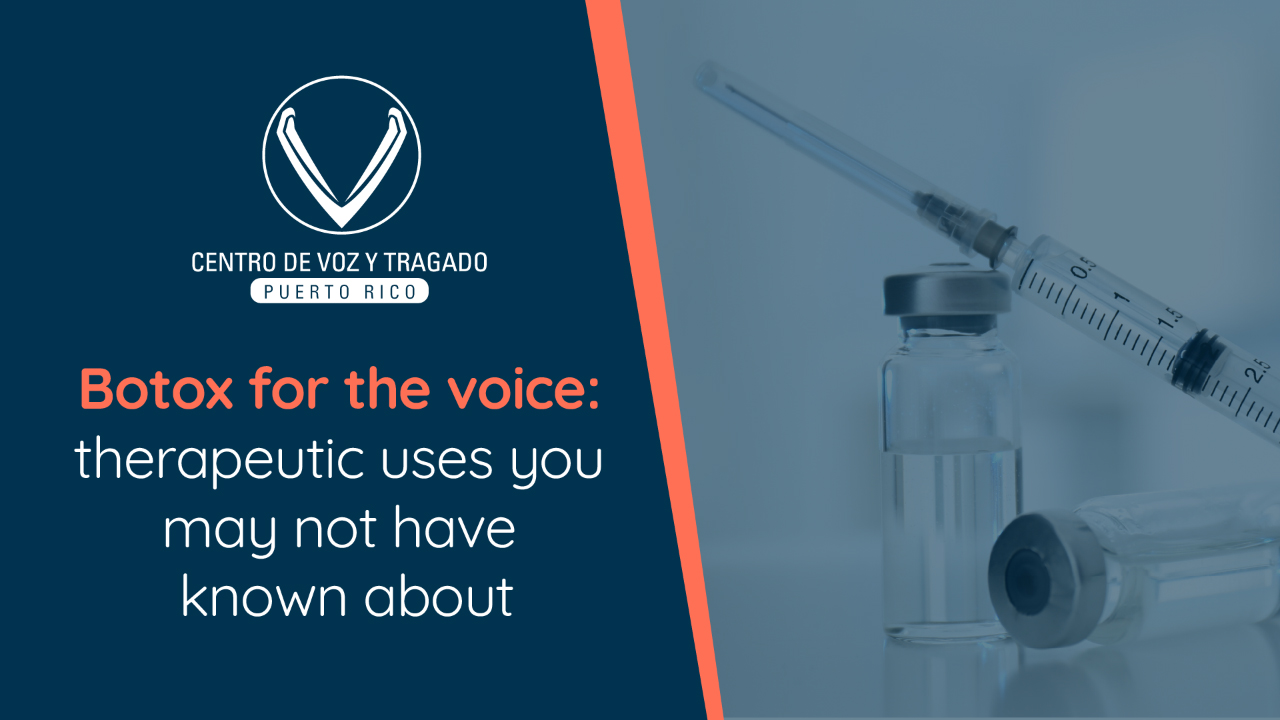
When most people hear the word “Botox,” they immediately think of cosmetic treatments for wrinkles. But what many don’t know is that botulinum toxin has fascinating medical applications, and one of the most transformative is its use in treating voice disorders. In my practice, Botox is a therapeutic tool that has changed the lives of many of my patients.
What Is Botulinum Toxin and How Does It Work?
Botox is a protein produced by the bacterium Clostridium botulinum. When injected in controlled amounts into a specific muscle, it temporarily blocks the nerve signals that cause that muscle to contract. The result is a controlled relaxation of the treated muscle. This effect is temporary, generally lasting between three and six months, after which the muscle gradually regains its normal function.
In the context of voice disorders, this property is incredibly useful. There are conditions in which the muscles of the larynx contract involuntarily or excessively, producing a voice that sounds choppy, trembling, or strained. By selectively relaxing these muscles, we can restore a more natural vibration pattern of the vocal cords.
Spasmodic Dysphonia: The Primary Indication
Spasmodic dysphonia is probably the condition where Botox has demonstrated its greatest impact. It is a neurological movement disorder — a form of focal dystonia — in which the muscles of the larynx experience involuntary spasms during speech. There are two main forms: the adductor type, where the vocal cords close excessively producing a choppy and strained voice, and the abductor type, where the cords open inappropriately causing a breathy and weak voice.
The adductor form is the most common and responds exceptionally well to botulinum toxin injections. We inject small amounts directly into the thyroarytenoid muscles, which are the muscles responsible for closing the vocal cords. The procedure is performed in the office, guided by electromyography to ensure injection precision.
The results are impressive. Most patients experience significant improvement in voice quality within two to five days after the injection. It is common for the voice to be softer or breathier during the first few days, but it then stabilizes into a much smoother and more natural vocal quality.
Other Applications in Voice Disorders
Beyond spasmodic dysphonia, botulinum toxin is also used in other vocal conditions. In essential vocal tremor, where the vocal cords and surrounding structures tremble during speech, producing a wavering voice, Botox can significantly reduce the amplitude of the tremor and improve vocal stability.
We also use it in cases of severe muscle tension dysphonia that does not respond adequately to conventional voice therapy. In these patients, a Botox injection can help “break” the cycle of excessive muscle tension, making voice therapy more effective.
Another important application is in patients with recurrent contact granulomas. These are benign growths that appear at the back of the vocal cords, frequently associated with reflux and muscle tension. A Botox injection into the lateral cricoarytenoid muscle can reduce closing force and allow the granuloma to heal.
The Procedure: What to Expect
For patients considering this treatment, I want to demystify the procedure. Botox injection into the larynx is performed in the office, without the need for general anesthesia. We use a transcutaneous approach, that is, through the skin of the neck, guided by electromyography, which allows us to listen to the electrical activity of the muscle and confirm that the needle is in the correct position.
The procedure takes approximately 15 to 20 minutes and most patients tolerate it very well. There may be mild discomfort at the injection site, similar to that of any intramuscular injection. No recovery time is required, patients can resume their normal activities immediately.
Important Considerations
Like all medical treatments, laryngeal Botox injections require experience and precision. The dose must be carefully calibrated for each patient, as too much toxin can cause excessive voice weakness or transient difficulty swallowing, while too little may not provide sufficient relief.
In my practice, I personalize the dose and injection intervals for each patient. We generally start with a conservative dose and adjust it based on the response. Over time, we find the optimal dose that provides the greatest benefit with the fewest side effects.
A Treatment That Transforms Lives
If you experience a voice that sounds choppy or trembling, or if you feel spasms when speaking, I invite you to seek a specialized evaluation. The correct diagnosis is the first step, and treatment options such as botulinum toxin can offer you significant relief.