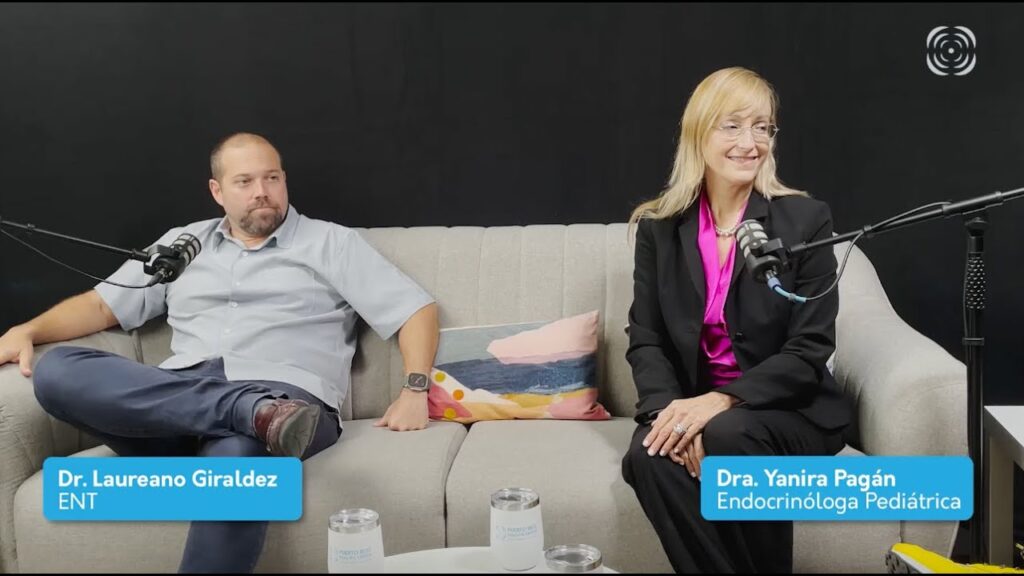
By Dr. Laureano Giraldez-Rodriguez, MD, FACS
“Doctor, they found a nodule in my thyroid. Should I be worried?” This is one of the questions I hear most often in my practice. And I completely understand the anxiety it causes. The word “nodule” can sound alarming, but the reality is that thyroid nodules are extremely common and, in the vast majority of cases, benign. What matters is knowing when a nodule requires additional attention and when it simply needs monitoring.
What is a thyroid nodule?
The thyroid is a butterfly-shaped gland located at the front of the neck. It produces hormones that regulate metabolism, energy, body temperature, and many other vital functions. A thyroid nodule is an abnormal growth of cells within the gland that forms a mass or lump.
What many people don’t know is just how incredibly common these nodules are. It is estimated that up to 50% of the adult population has at least one thyroid nodule when examined with high-resolution ultrasound. Most of these nodules are small, asymptomatic, and completely benign. Only between 5 and 15% of thyroid nodules turn out to be cancerous.
How are they discovered?
Thyroid nodules can be discovered in several ways. Some patients notice a visible lump in the neck or a sensation of pressure. In other cases, the primary care physician detects the nodule during a routine physical exam. But increasingly, nodules are discovered incidentally — during imaging studies performed for another reason, such as a neck CT scan, a carotid ultrasound, or a PET Scan.
This incidental finding is responsible for a great deal of anxiety. I want to reassure those in this situation: the fact that a nodule was discovered by chance does not mean it is dangerous. What determines whether we should be concerned are the characteristics of the nodule, not how it was found.
When is a biopsy needed?
Not all thyroid nodules need a biopsy. The decision is based on several factors we evaluate carefully. The thyroid ultrasound is our main tool for characterizing a nodule. We examine its size, shape, borders, composition (whether solid, cystic, or mixed), echogenicity (whether it is darker or lighter than normal tissue), presence of calcifications, and vascularity.
Classification systems such as TI-RADS help us categorize nodules according to their risk of malignancy. We generally recommend a fine needle aspiration biopsy, known as FNA, when the nodule measures more than one centimeter and has suspicious features, when it has highly suspicious features regardless of size, or when there are additional risk factors such as a family history of thyroid cancer or prior radiation exposure.
What does the FNA involve?
Fine needle aspiration biopsy is an outpatient procedure performed in the office. Under ultrasound guidance to ensure precision, we insert a fine needle into the nodule and extract a small sample of cells. The procedure takes approximately 15 minutes and is generally very well tolerated.
Most patients describe a sensation of pressure rather than pain. It does not require general anesthesia, although we use local anesthesia for added comfort. After the procedure, there may be mild discomfort or a small bruise at the puncture site, but patients can resume their normal activities immediately.
FNA results are generally available within one to two weeks and are classified according to the Bethesda system, which categorizes samples from benign to malignant, with some intermediate categories that may require follow-up or additional testing.
When NOT to worry
Purely cystic thyroid nodules, that is, filled with fluid, are almost always benign. Small nodules with no suspicious features on ultrasound generally only require periodic follow-up. And if your thyroid function is normal, indicated by normal TSH levels, that is another reassuring factor.
My approach as a specialist
In my practice, I firmly believe in a balanced approach: enough vigilance to not miss something important, but without subjecting patients to unnecessary procedures or disproportionate anxiety. Every nodule is different, and every patient deserves an individualized evaluation.
If you’ve been found to have a thyroid nodule, the next step is an evaluation with specialized ultrasound and a consultation with a physician experienced in thyroid pathology. Together we can determine whether your nodule requires a biopsy, periodic imaging follow-up, or simply observation.
Don’t let uncertainty consume you. A proper evaluation can give you the peace of mind you need — or, if the nodule turns out to be concerning, allow for timely treatment with excellent outcomes.