By Dr. Laureano Giraldez-Rodriguez, MD, FACS
Swallowing is one of those movements we do without thinking. But when something goes wrong in that process, the consequences can be serious: choking, weight loss, lung infections, and fear at mealtimes. The problem is that many of these complications occur in ways that aren’t always seen or felt. That’s why, in order to treat dysphagia properly, we first need to understand exactly what is happening inside.
What Is the Modified Barium Swallow Study?
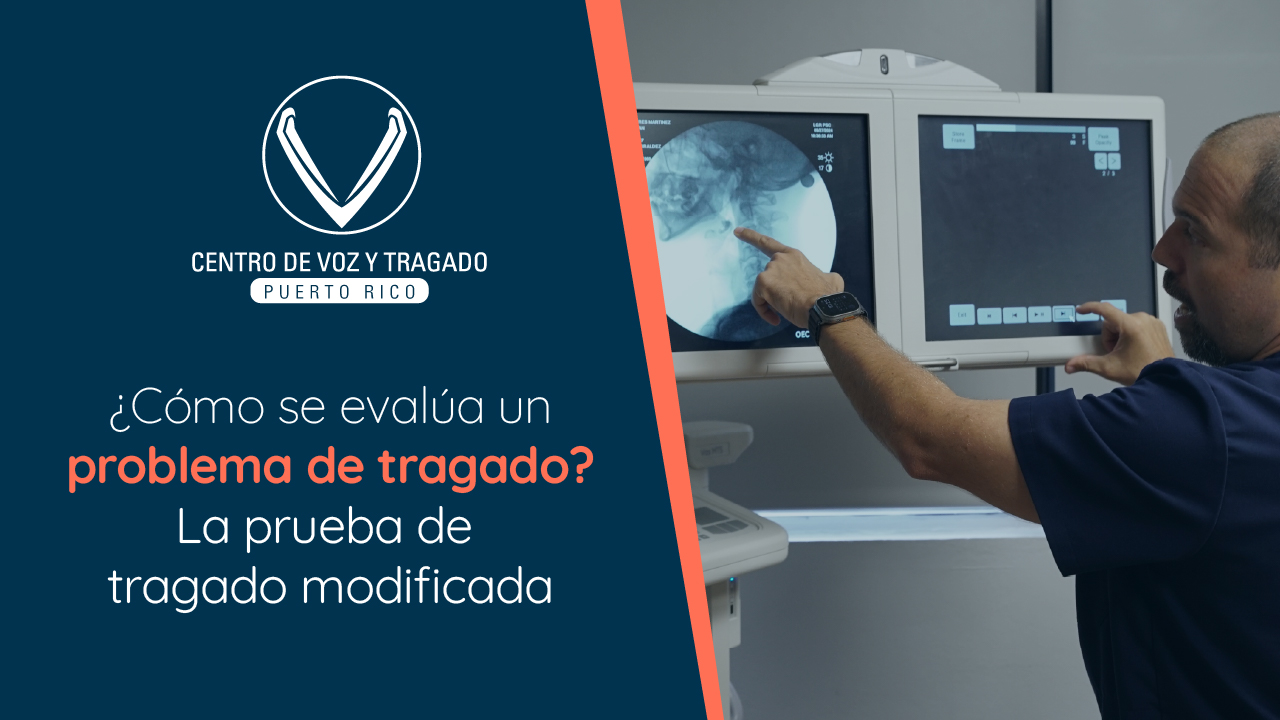
This test is a specialized radiological study that allows us to see in real time how foods and liquids pass from the mouth to the esophagus. Unlike a standard X-ray that captures a static image, videofluoroscopy is like an X-ray movie where the entire swallowing process is visible as it happens.
During the study, the patient consumes foods and liquids mixed with barium, a contrast substance that is safe and allows food to be visible under fluoroscopy. Different consistencies are used: thin liquids like water, thick liquids like nectar, semi-solid foods like puree, and solids like a cracker. This allows us to evaluate how your swallowing system handles each type of texture.
Why Perform This Test?
This study shows us things we cannot see any other way. It allows us to determine whether aspiration is occurring — meaning whether foods or liquids are entering the airway — something that can happen without the patient coughing or even noticing, which we call silent aspiration. It shows us whether food residue is remaining stuck in the throat after swallowing, indicating weakness in the pharyngeal muscles. We can observe whether the epiglottis — the natural flap that protects your airway — is moving properly. And it allows us to evaluate the coordination of all the movements involved in swallowing.
The Procedure
Many patients arrive nervous for this study, but it is a simple, non-invasive procedure that generally lasts between 15 and 30 minutes. It requires no anesthesia or sedation.
- You are seated in a special chair in front of the fluoroscopy machine.
- We give you the different barium-mixed foods and liquids, typically starting with small sips of thin liquid and progressing to thicker consistencies and solids.
- While you swallow, we observe exactly what is happening on screen and record everything for later analysis.
- If we see a consistent problem, we can test different compensatory strategies during the same study — such as changing head position, modifying sip volume, or thickening liquids — to see what works best for each patient.
Preparation for the Study
Preparation is straightforward. We generally ask that you avoid eating or drinking anything for two hours before the study. If you wear dentures, bring them in. And if there are specific foods that cause you more difficulty, bring those as well so we can evaluate you with them.
It is important to inform us about your medications, especially if you take blood thinners or have any allergies. Barium is generally very well tolerated, but we always want to have a complete picture of your health.
The Results
Once the study is complete, we analyze the recorded images in detail. We review each swallow in slow motion, frame by frame, evaluating the function of each structure involved in swallowing. We then prepare a detailed report with our findings and recommendations.
Depending on the results, the plan may include personalized swallowing therapy with specific exercises to strengthen the muscles involved, recommendations on the safest food textures and liquid consistencies for you, postural strategies to help you swallow more safely, or referrals to other specialists if the findings suggest a cause that requires further evaluation.
What Can’t Be Seen, Can’t Be Treated
The Modified Barium Swallow Study is the map that allows us to design the right treatment for you. Without it, we would be working blind. With it, we can see exactly where the problem is, which structures are involved, and which strategies work best for your particular case.
If you have difficulty swallowing, choke frequently, or feel that something isn’t right at mealtimes, don’t let it go. At CVTPR we are here to evaluate you with the right tools and support you every step of the way.